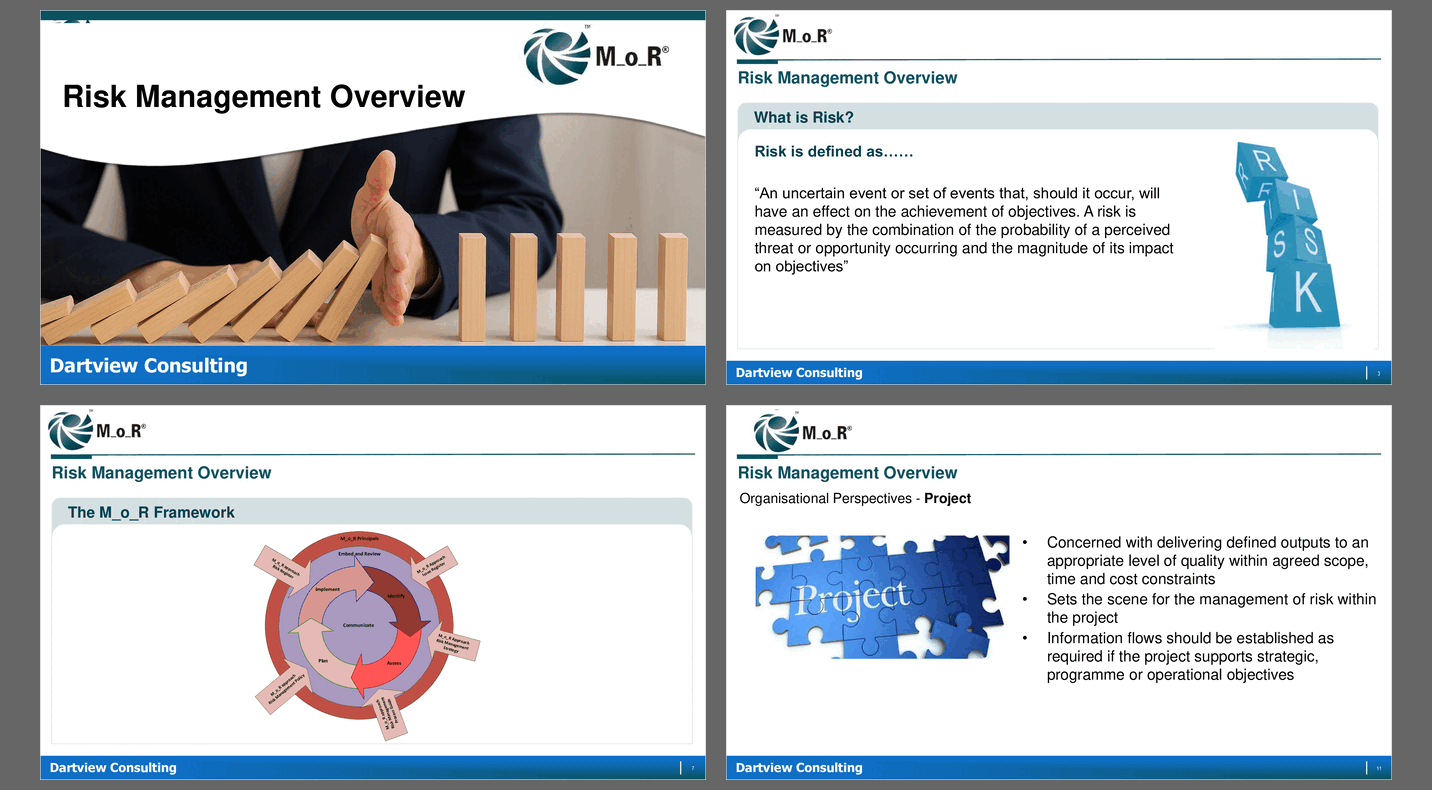

This document is an 85-slide PowerPoint presentation that provides a Risk Management Overview based on the M_o_R methodology that has been recognized worldwide as the leading Best Practice framework for successful management of Business Risk.
The document is easily customizable, content can be removed (or simply skipped over during presentation), and additional slides can be added to provide more subject depth. There are also plenty of graphics are included in order to provide illustration of key points.
This comprehensive guide covers the framework, tools, and techniques that will allow any organization to take a considered and measured approach towards protecting its business through the reduction of its exposure to risk.
You will learn about Risk Appetite, Risk Capacity, Risk Tolerance, Residual Risk, Consequential Risk, and much more. The M_o_R framework is recognized throughout the world as industry leading practice when considering the adoption of formal Risk Management into an organization.
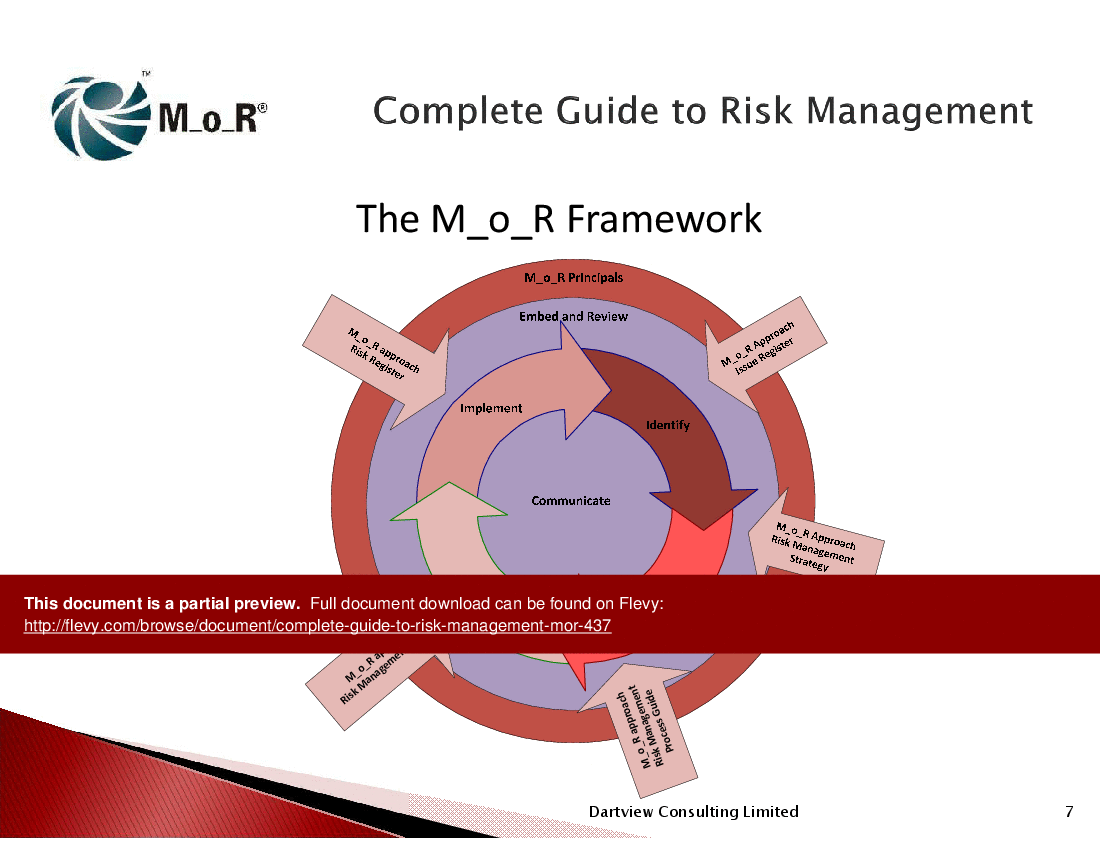
The framework is built on 4 core concepts of —
1. Principals
2. Approach
3. Process
4. Embedding & Reviewing
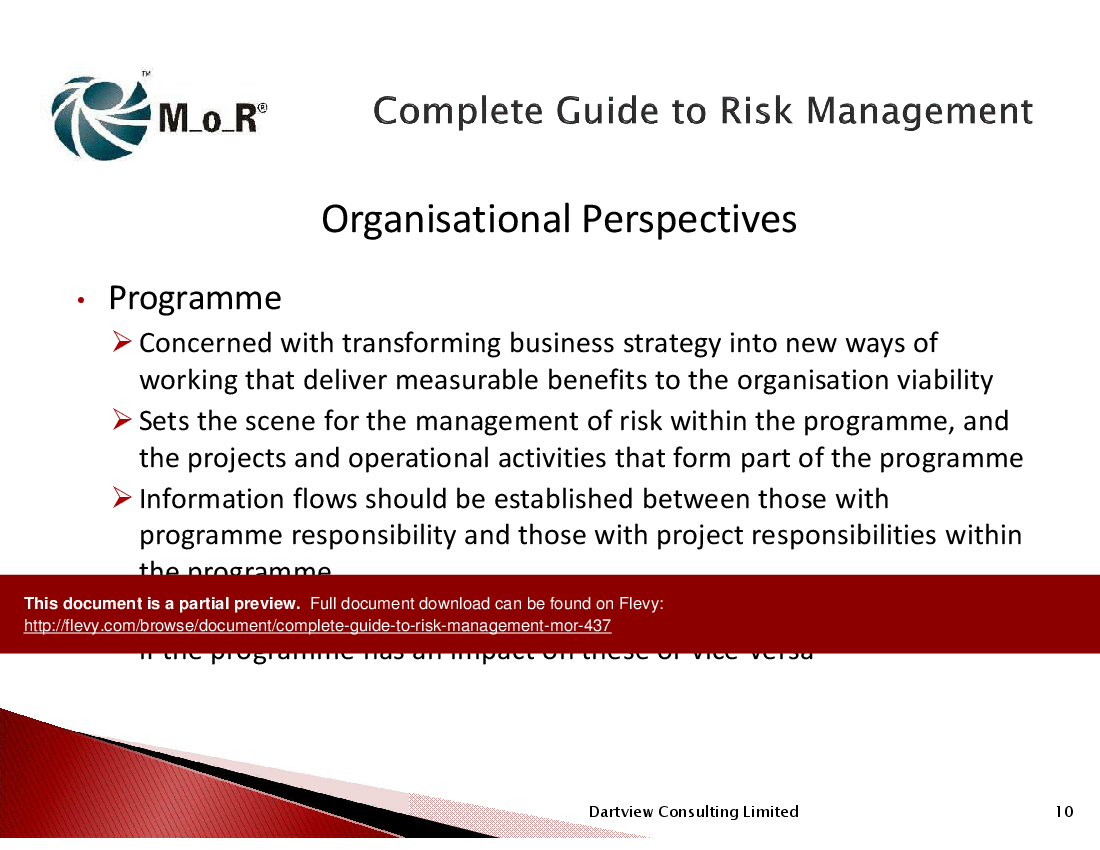
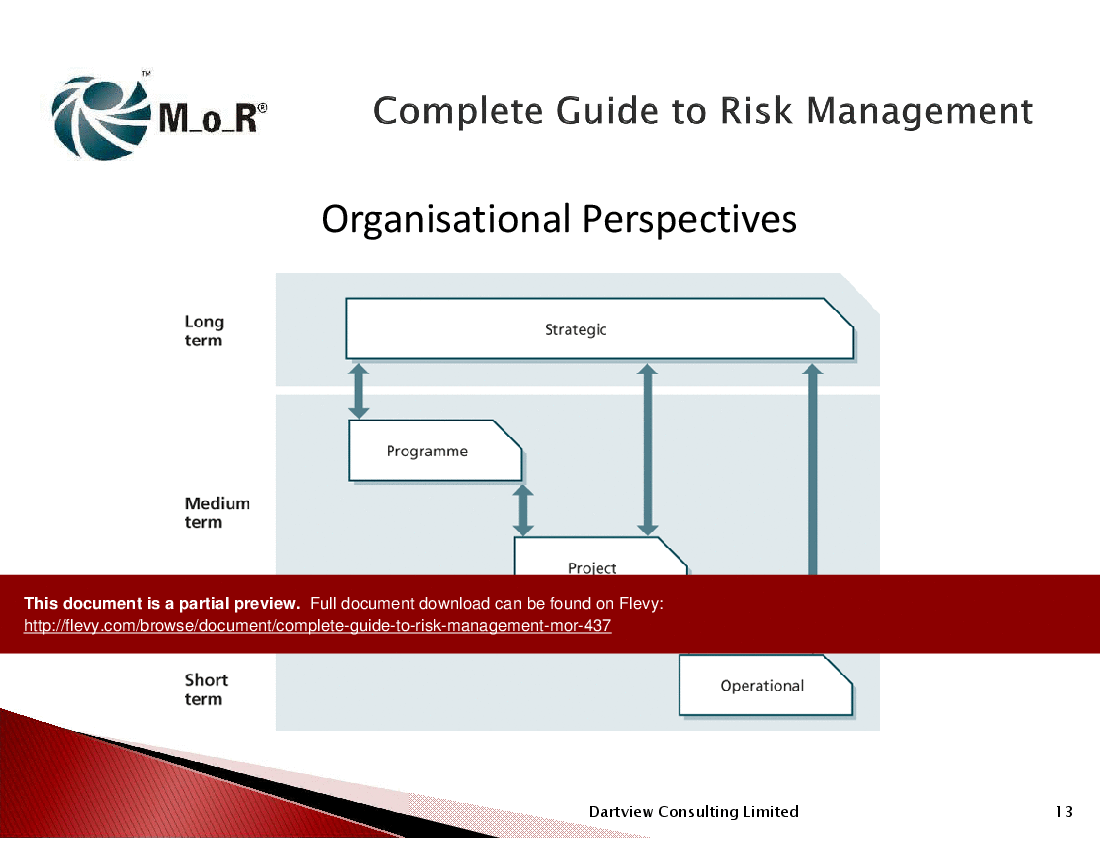
— and considers risk through 4 "lenses" or perspectives —
1. Strategic (risk posed to achieving the long-term strategic goals or "future state vision" of the organization)
2. Program (risk posed to the success of medium to long-term transformational change initiatives)
3. Project (risk posed to the success of short to medium term change initiatives)
4. Operational (risk posed to successfully maintaining the "current state" of the business)
Layered across these concepts and perspectives are 8 principals:
1. Aligns with objectives
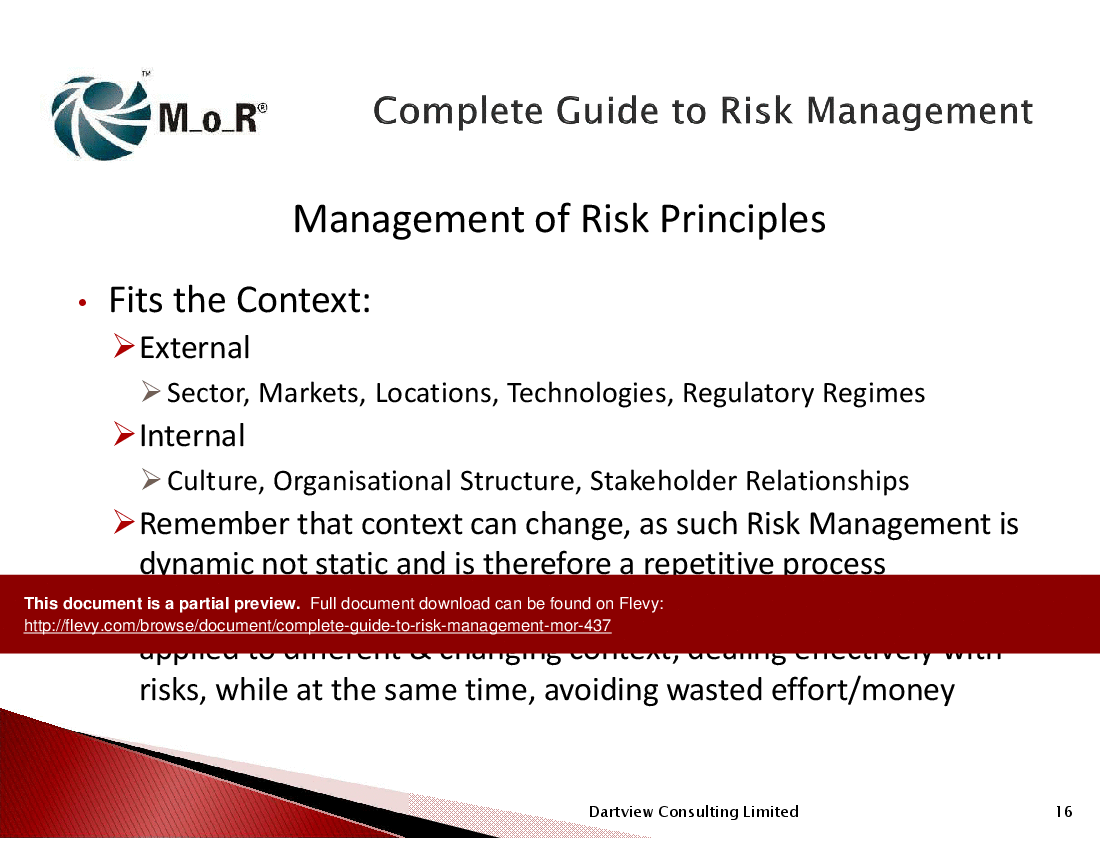
2. Fits the context
3. Engages stakeholders
4. Provides clear guidance
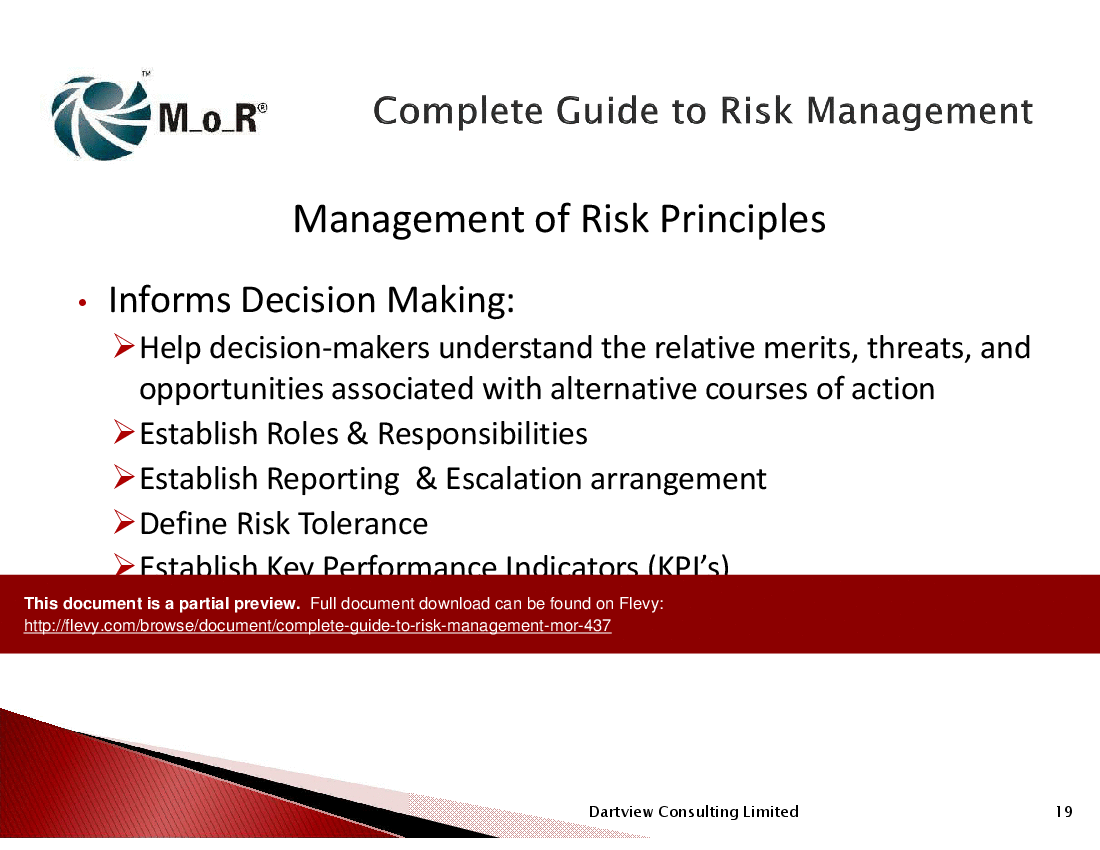
5. Informs decision-making
6. Facilitates continual improvement
7. Creates a supportive culture
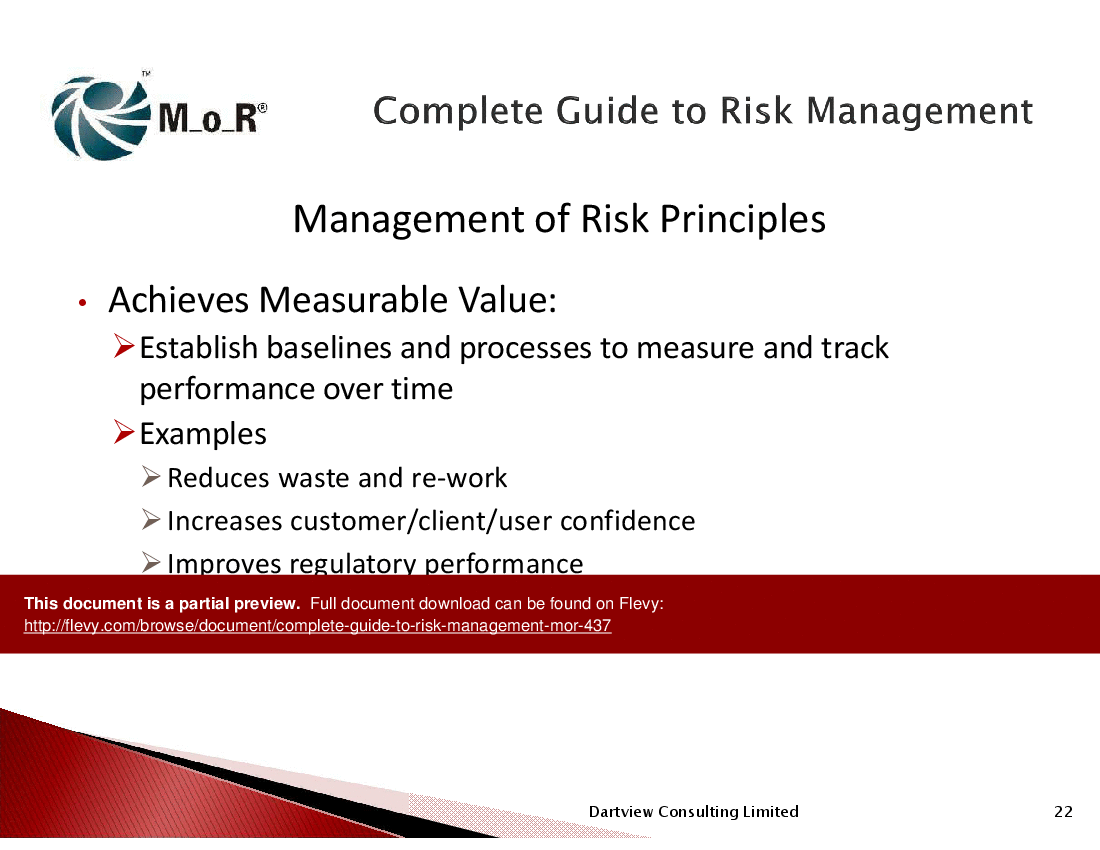
8. Achieves measurable value
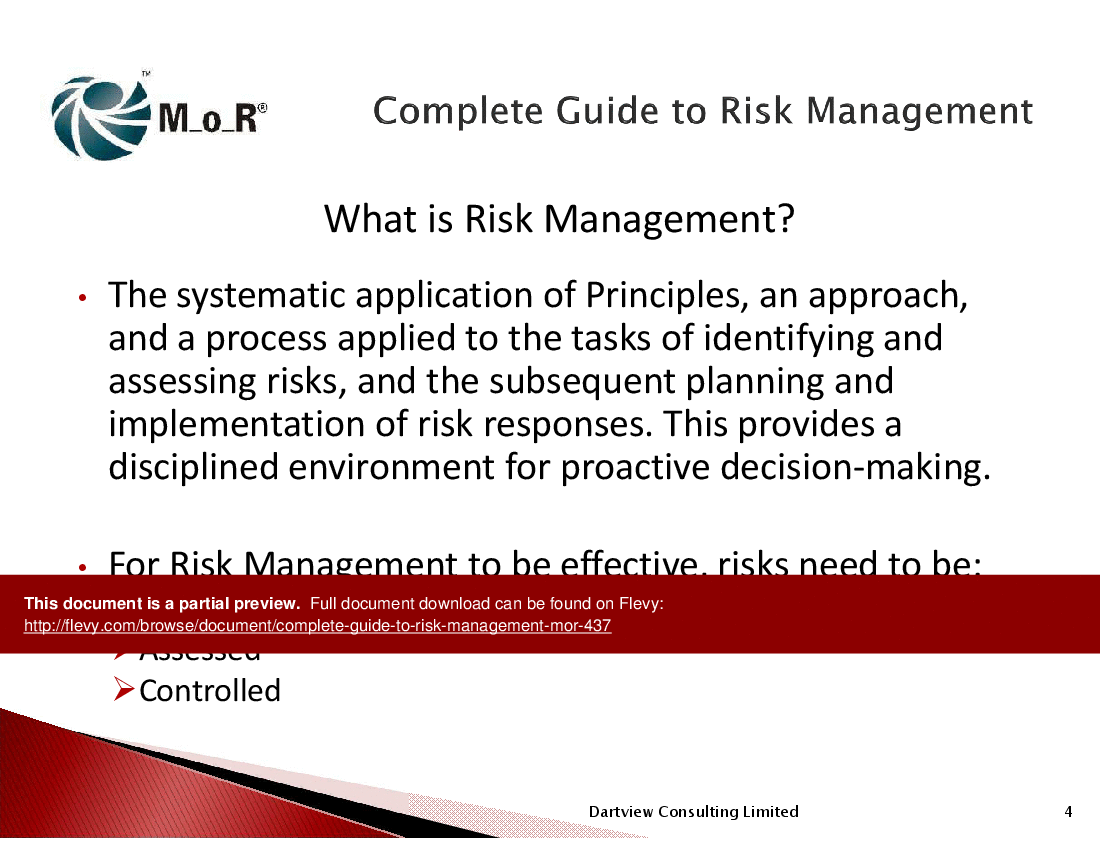
For Risk Management to be effective, risks need to be:
• Identified: Considering uncertainties that would affect the achievement of objectives within the context of a particular organisational activity, and then describing/communicating them in order to ensure a common understanding
• Assessed: Estimating the probability, impact and proximity of individual risks so they can be prioritized. Understanding the overall level of risk (risk exposure) associated with the organisational activity
• Controlled: Planning appropriate responses to risks, assigning owners and actionees. Implementing, monitoring and controlling these responses
The framework can be used across all types of business sectors, and can be scaled to suit all sizes. The effective management of risk can make a considerable difference to both an organization's bottom line and in its reputation in terms of how its governance is perceived in the market place in which it operates.
The guide also emphasizes the importance of communication and stakeholder engagement throughout the risk management process. It provides practical steps for embedding risk management into the organizational culture to ensure long-term sustainability.
Got a question about the product? Email us at support@flevy.com or ask the author directly by using the "Ask the Author a Question" form. If you cannot view the preview above this document description, go here to view the large preview instead.
Executive Summary
The "Complete Guide to Risk Management (M_o_R)" presentation provides a comprehensive overview of risk management principles, frameworks, and techniques essential for corporate executives and consultants. This PowerPoint deck equips users with the necessary tools to identify, assess, and control risks effectively, ensuring that organizations can achieve their objectives while minimizing potential threats. By leveraging the M_o_R framework, users will learn to embed risk management practices within their organizational culture, facilitating proactive decision-making and continuous improvement.
Who This Is For and When to Use
• Corporate executives responsible for strategic oversight and risk governance
• Project managers tasked with delivering outputs within defined constraints
• Program managers transforming business strategies into operational realities
• Risk management consultants seeking a structured approach to risk assessment
Best-fit moments to use this deck:
• During strategic planning sessions to align risk management with organizational objectives
• In project kick-off meetings to establish risk identification and assessment protocols
• For training workshops aimed at embedding risk management practices across teams
• When conducting risk reviews or health checks to evaluate existing risk management frameworks
Learning Objectives
• Define risk and its implications for organizational objectives
• Build a comprehensive risk management framework using the M_o_R principles
• Establish effective risk identification, assessment, and control processes
• Communicate risk management strategies to stakeholders effectively
• Facilitate continuous improvement in risk management practices
• Create a supportive culture that prioritizes proactive risk management
Table of Contents
• What is Risk? (page 3)
• What is Risk Management? (page 4)
• The M_o_R Framework (page 6)
• Organisational Perspectives (page 8)
• Management of Risk Principles (page 14)
• Management of Risk Approach (page 24)
• Management of Risk Process (page 37)
• Embedding & Reviewing (page 56)
• Risk Categorisation (page 62)
• Risk Response Types (page 63)
• Risk Management Techniques (page 65)
• Risk Health Check (page 78)
• Risk Maturity Model (page 82)
Primary Topics Covered
• Risk Definition - Risk is characterized as an uncertain event that can impact the achievement of objectives, measured by its probability and potential impact.
• Risk Management Overview - A systematic approach to identifying, assessing, and controlling risks, ensuring proactive decision-making.
• M_o_R Framework - Comprises principles, approach, process, and embedding/reviewing mechanisms to manage risk effectively.
• Organisational Perspectives - Addresses risk management from strategic, program, project, and operational viewpoints.
• Management of Risk Principles - Eight core principles guide effective risk management, including alignment with objectives and stakeholder engagement.
• Risk Management Techniques - Various tools and techniques, such as PESTLE and SWOT analyses, are employed throughout the risk management process.
Deliverables, Templates, and Tools
• Risk Management Policy template outlining risk appetite, tolerance, and escalation procedures
• Risk Register for capturing and maintaining information on identified risks
• Issue Register for tracking current issues requiring action
• Risk Improvement Plan to document planned enhancements to risk management practices
• Risk Communications Plan detailing stakeholder communication strategies
• Risk Response Plan for managing specific risks effectively
Slide Highlights
• Overview of the M_o_R Framework illustrating its core components and flow
• Detailed explanation of the eight principles of effective risk management
• Visual representation of the Risk Maturity Model showcasing levels of maturity
• Examples of risk categorization and response types for practical application
• Summary Risk Profile slide demonstrating overall risk exposure and tolerance thresholds
Potential Workshop Agenda
Introduction to Risk Management (60 minutes)
• Define key concepts of risk and risk management
• Discuss the importance of embedding risk management in organizational culture
M_o_R Framework Deep Dive (90 minutes)
• Explore the principles and approach of the M_o_R framework
• Analyze case studies to illustrate effective risk management practices
Risk Identification and Assessment Techniques (90 minutes)
• Hands-on exercises using PESTLE and SWOT analyses
• Develop a Risk Register based on real-world scenarios
Customization Guidance
• Tailor the Risk Management Policy to reflect your organization's specific risk appetite and tolerance levels
• Modify the Risk Register template to include additional categories relevant to your industry
• Adapt communication strategies in the Risk Communications Plan to align with stakeholder preferences
Secondary Topics Covered
• Risk Health Check methodologies for evaluating risk management effectiveness
• Techniques for stakeholder analysis and engagement
• The importance of continuous improvement in risk management practices
• Strategies for overcoming common barriers to effective risk managementDocument FAQ
What is the M_o_R framework?
The M_o_R framework is a structured approach to risk management that encompasses principles, processes, and techniques to effectively identify, assess, and manage risks within an organization.
How can I implement risk management in my organization?
Begin by establishing a Risk Management Policy, followed by creating a Risk Register and implementing the M_o_R framework to guide your processes.
What are the key principles of effective risk management?
The eight principles include alignment with objectives, stakeholder engagement, and the facilitation of continual improvement, among others.
What techniques are used in risk management?
Common techniques include PESTLE analysis, SWOT analysis, and stakeholder analysis, which help in identifying and assessing risks.
How do I measure the effectiveness of risk management practices?
Conduct regular risk health checks and utilize the Risk Maturity Model to assess and improve your organization's risk management capabilities.
What is a Risk Register?
A Risk Register is a tool used to capture and maintain information on identified risks, including their descriptions, categories, and response actions.
What is the purpose of a Risk Improvement Plan?
The Risk Improvement Plan outlines the actions needed to enhance risk management practices and embed them within the organizational culture.
How can I engage stakeholders in risk management?
Engage stakeholders through regular communication, stakeholder mapping, and by involving them in the risk identification and assessment processes.
Glossary
• Risk - An uncertain event that can affect the achievement of objectives.
• Risk Management - The systematic application of principles and processes to identify, assess, and control risks.
• M_o_R - Management of Risk framework for effective risk management.
• Risk Register - A document that captures identified risks and their management strategies.
• Stakeholder - An individual or group with an interest in the outcome of a project or organizational activity.
• Risk Appetite - The amount of risk an organization is willing to accept.
• Risk Tolerance - The threshold level of risk that triggers escalation within the organization.
• Risk Capacity - The maximum amount of risk an organization can bear without negative consequences.
• SWOT Analysis - A technique for identifying strengths, weaknesses, opportunities, and threats.
• PESTLE Analysis - A framework for analyzing external factors affecting an organization.
• Risk Response Plan - A detailed plan for responding to specific risks.
• Risk Health Check - A periodic assessment of risk management practices.
• Risk Maturity Model - A framework for assessing the maturity of an organization's risk management practices.
• Issue Register - A document for tracking current issues requiring action.
• Risk Improvement Plan - A plan for enhancing risk management practices within an organization.
• Stakeholder Analysis - A technique for identifying and understanding stakeholders' interests and influences.
• Summary Risk Profile - A visual representation of overall risk exposure and tolerance levels.
• Continuous Improvement - Ongoing efforts to enhance risk management practices over time.
Source: Best Practices in Risk Management PowerPoint Slides: Complete Guide to Risk Management (M_o_R) PowerPoint (PPTX) Presentation Slide Deck, Dartview Consulting
This document is available as part of the following discounted bundle(s):

Save %!
Governance, Risk & Due Diligence
This bundle contains 3 total documents. See all the documents to the right.
Save %!
Project Management & Risk Management
This bundle contains 2 total documents. See all the documents to the right.
Save %!
Best Practice (ITIL, Prince2, Risk)
This bundle contains 9 total documents. See all the documents to the right.
|
Receive our FREE presentation on Operational Excellence
This 50-slide presentation provides a high-level introduction to the 4 Building Blocks of Operational Excellence. Achieving OpEx requires the implementation of a Business Execution System that integrates these 4 building blocks. |









